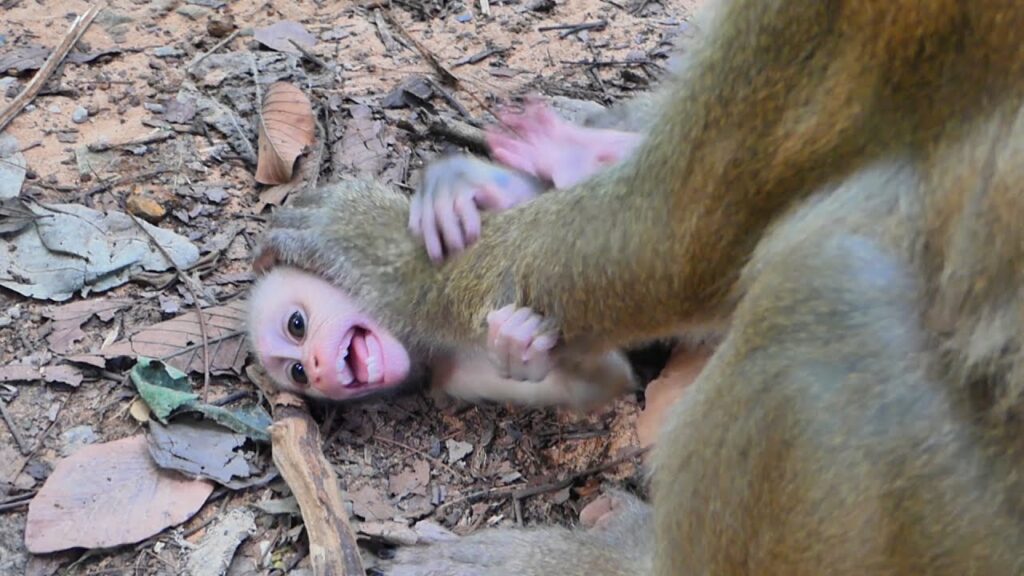
Deep in the warm forest clearing, little Lily followed her mother Libby with her usual energetic hops, always curious, always eager to stay close. But this morning, Lily’s playful mood pushed a bit too far. She tugged at Libby’s tail, grabbed a leaf the mother had been eating, and even tried climbing onto Libby’s head while she was grooming herself. For a moment, Libby tolerated it—she always loved her daughter’s spirited energy—but eventually the little one needed a lesson in boundaries.
When Lily ignored repeated warning grunts, Libby turned and used a natural disciplining gesture common among macaque mothers. She placed her hand gently but firmly on the back of Lily’s neck, pressing her down to the ground—not to hurt her, but to calm her and make her stay still. To a tiny baby like Lily, the moment felt overwhelming, and she burst into loud, dramatic cries that echoed through the trees. Her small arms stretched forward, her legs kicked softly, and her face scrunched into a tearful expression.
Libby held her for only a few seconds, long enough for the message to sink in. It was a “hot lesson”—the kind of quick, intense correction that wild monkey mothers often use to teach young ones proper behavior. As soon as Lily stopped squirming, Libby released her and checked her gently, pulling her close for reassurance.
Lily sniffled, still whimpering, but she quickly climbed into her mother’s arms. The discipline was over; now it was time for comfort. Libby groomed Lily’s back slowly, letting her feel safe again. Within minutes, the little one’s tears faded, replaced by soft coos as she nestled into her mother’s warm chest.
In the wild, even emotional moments like these help young monkeys learn, grow, and stay protected beside their mothers.