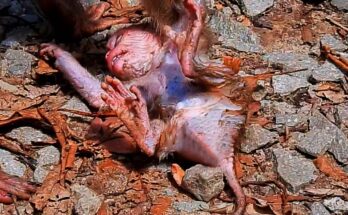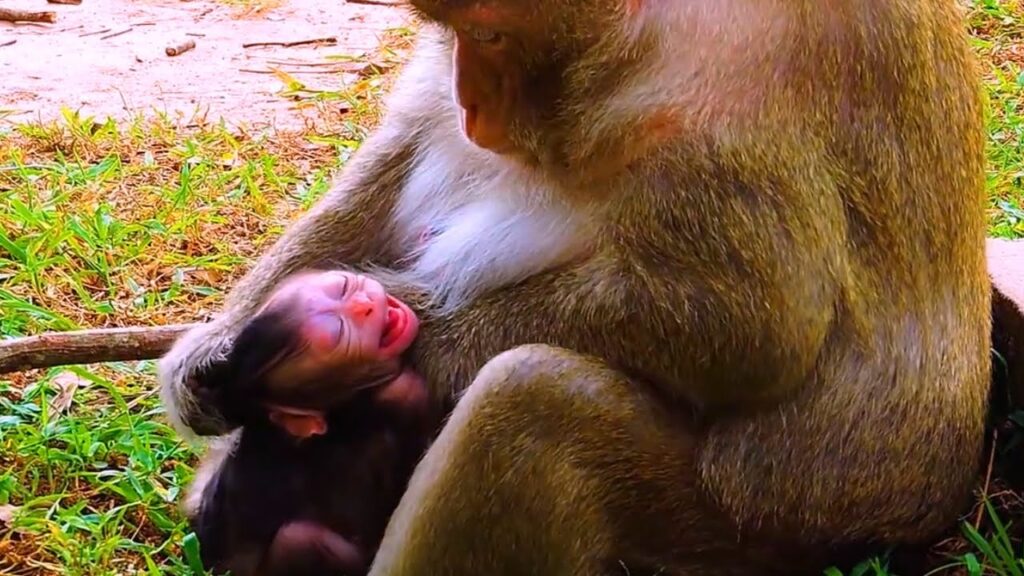
In the quiet early morning, the forest was still wrapped in mist when the newborn baby clung tightly to her mother’s belly. Her tiny fingers gripped strands of fur, not out of mischief, but out of fear. She was new to the world, weak and hungry, searching only for warmth and milk. The oldest mother, tired and worn by years of raising many babies, shifted impatiently on the branch. Time passed slowly as the baby nursed, drinking little by little, needing comfort more than food.
The mother seemed bored and restless. She glanced around, distracted by sounds of other monkeys playing and leaping nearby. Her body language showed exhaustion rather than love. When the baby continued to take milk for a long time, the mother suddenly pulled away. In that moment, the newborn lost balance and cried loudly, her small voice echoing through the trees. She held on by gripping her mother’s hair, terrified of falling into the empty space below.
Other monkeys paused and watched. Some showed concern, others stayed distant, knowing that life in the wild is often harsh. The baby’s cries were not just hunger, but a call for patience and care. After a tense moment, the mother sighed and steadied herself. Though annoyed, she did not let the baby fall. She adjusted her grip and allowed the newborn to climb back safely.
This scene was painful to witness, yet it revealed a hard truth of nature. Not every mother is gentle, and not every beginning is filled with tenderness. Still, survival often comes from small mercies. The baby calmed down, her breathing slow and shaky, while the mother sat quietly, staring into the forest.
In that fragile moment, hope remained. Even tired hearts can choose restraint, and even the weakest cries can change an ending.