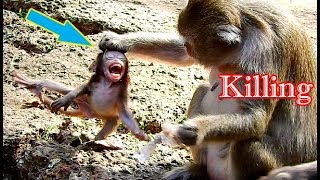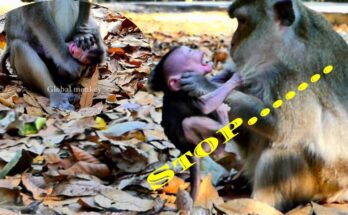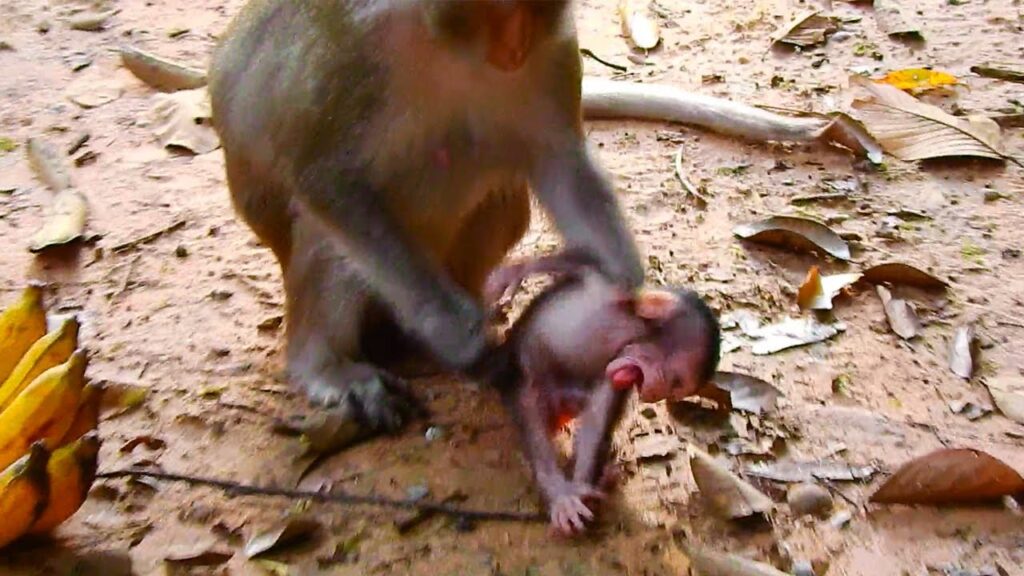
Ara had just discovered something new about the world—his tiny, sharp teeth. They felt strange and exciting, and like any curious baby, he wanted to test them. Nestled close to his mother Anna, Ara suckled for comfort, but every now and then his jaw tightened. A quick nip followed, not meant to hurt, only to explore. Ara didn’t yet understand the difference between play and pain.
Anna understood immediately.
The first bite made her flinch. She turned her head sharply, eyes flashing with warning. Ara paused, confused, then tried again. This time Anna reacted faster. She gently but firmly bit back, not to injure him, but to teach. It was the language of monkeys—clear, direct, and full of meaning. Ara squeaked in surprise and pulled away, his little hands clutching her fur.
The forest was quiet except for their soft sounds. Anna watched him closely, patience mixed with discipline. She allowed him to return, guiding his mouth, reminding him where milk came from and how it should be taken. When Ara forgot and tested his teeth again, Anna corrected him once more. Each response was measured, never cruel, always purposeful.
Slowly, Ara began to learn. The bites stopped turning into nips. His feeding became gentler, more careful. He leaned into his mother, comforted not only by her milk but by her presence. Anna relaxed too, grooming his head with slow strokes, reassuring him that the lesson was over.
This moment was not about anger—it was about teaching boundaries. In the wild, lessons come early and quickly. Anna’s actions were part of love, shaping Ara for survival. By the end of the day, Ara rested quietly against her chest, his new teeth still there, but his understanding much sharper.