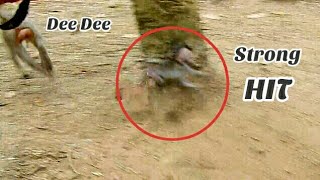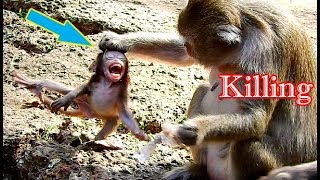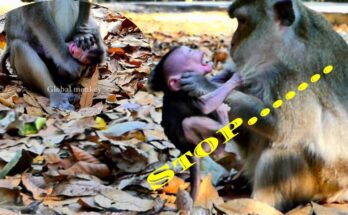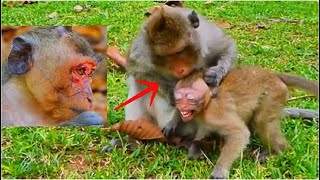
In the quiet edge of the forest, where morning light slipped through broken leaves, a small monkey named Righ lay trembling beneath a fig tree. He was young, curious, and gentle, always following others with trusting eyes. But that trust was shattered in a moment no one expected. The old mother monkey, hardened by age and hunger, turned suddenly cruel. In a burst of confusion and fear, she attacked, and Righ cried out as pain stole his breath.
The injury was serious. One of Righ’s bright eyes, once full of wonder, was lost forever. The forest seemed to hold its breath as his cries echoed through the branches. Birds fled. Leaves fell. No one dared come close. The old mother moved away, her face unreadable, leaving the poor baby alone on the cold ground.
Righ did not understand why this happened. He only knew fear, pain, and the deep loneliness that followed. Each movement hurt, and the world felt unbalanced, darker on one side. Still, his heart kept beating, stubborn and brave. He pulled himself closer to the tree, clinging to life with weak fingers.
As the sun climbed higher, other monkeys began to notice him. A young female approached first, slowly, softly. She did not bite or threaten. She watched, then sat near him, offering quiet warmth. Soon, others gathered. They did not erase the pain, but they surrounded Righ with something he had nearly lost—care.
Days passed. Righ learned to see again, not with two eyes, but with courage. He learned to listen more closely, to move carefully, to trust again. The scar remained, a silent memory of cruelty, but it did not define him.
In the end, Righ survived. His story became a reminder in the forest: even after deep harm, life can continue, and kindness—though late—can still arrive.