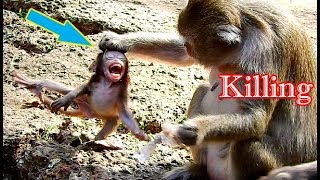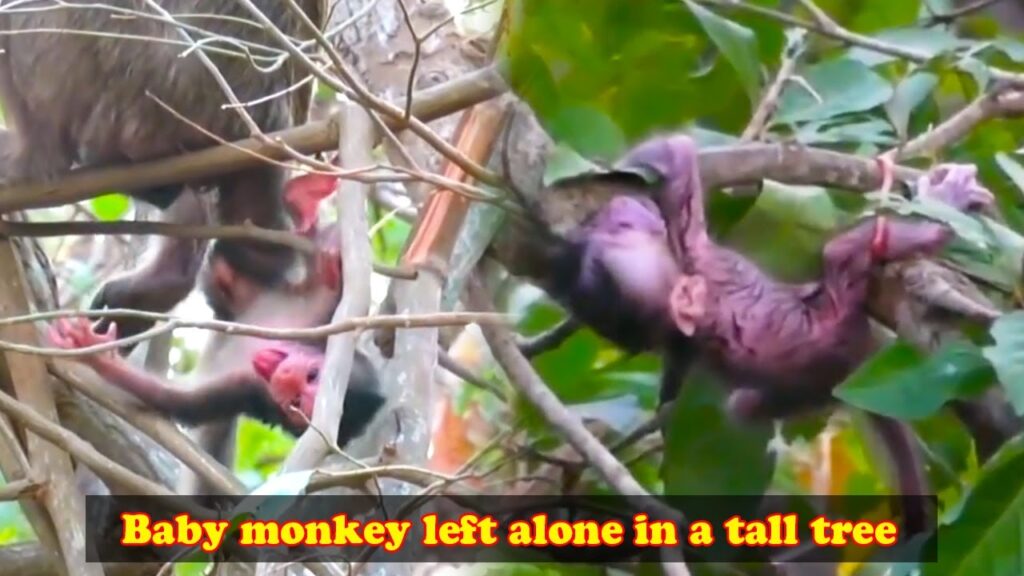
High above the forest floor, where the leaves whispered with the wind and sunlight broke into soft green patterns, a mother monkey climbed a tall tree with her baby clinging tightly to her chest. Her movements were careful but firm, each jump measured, each grip strong from years of survival in the wild. To the baby, the world felt enormous and frightening, and the only safety it knew was its mother’s warm fur and steady heartbeat.
As they reached a higher branch, the mother paused. The tree swayed gently, and the forest below seemed very far away. Slowly, she shifted her body and allowed the baby to hang from the branch, its tiny hands gripping the bark with all their strength. For a moment, it looked like abandonment, a heartbreaking scene that could easily be misunderstood by human eyes.
But in the wild, lessons are often taught through moments of fear and challenge. The mother stayed close, watching carefully. She did not leave the area or turn her back. Her sharp eyes followed every movement of her baby as it struggled, cried softly, and tried to hold on. This was not cruelty, but a test—an important step in teaching balance, strength, and independence.
Young monkeys must learn quickly. Trees are their homes, their escape routes, and their playgrounds. A single mistake can mean danger. By allowing her baby to experience this moment, the mother was preparing it for a life where she could not always be there.
After a short time, the mother reached out and pulled her baby back into her arms. The baby clung tighter than before, wiser and stronger from the experience. In the quiet rustle of leaves, the lesson was complete—love in the wild is not always gentle, but it is always purposeful.